Hive-Queen
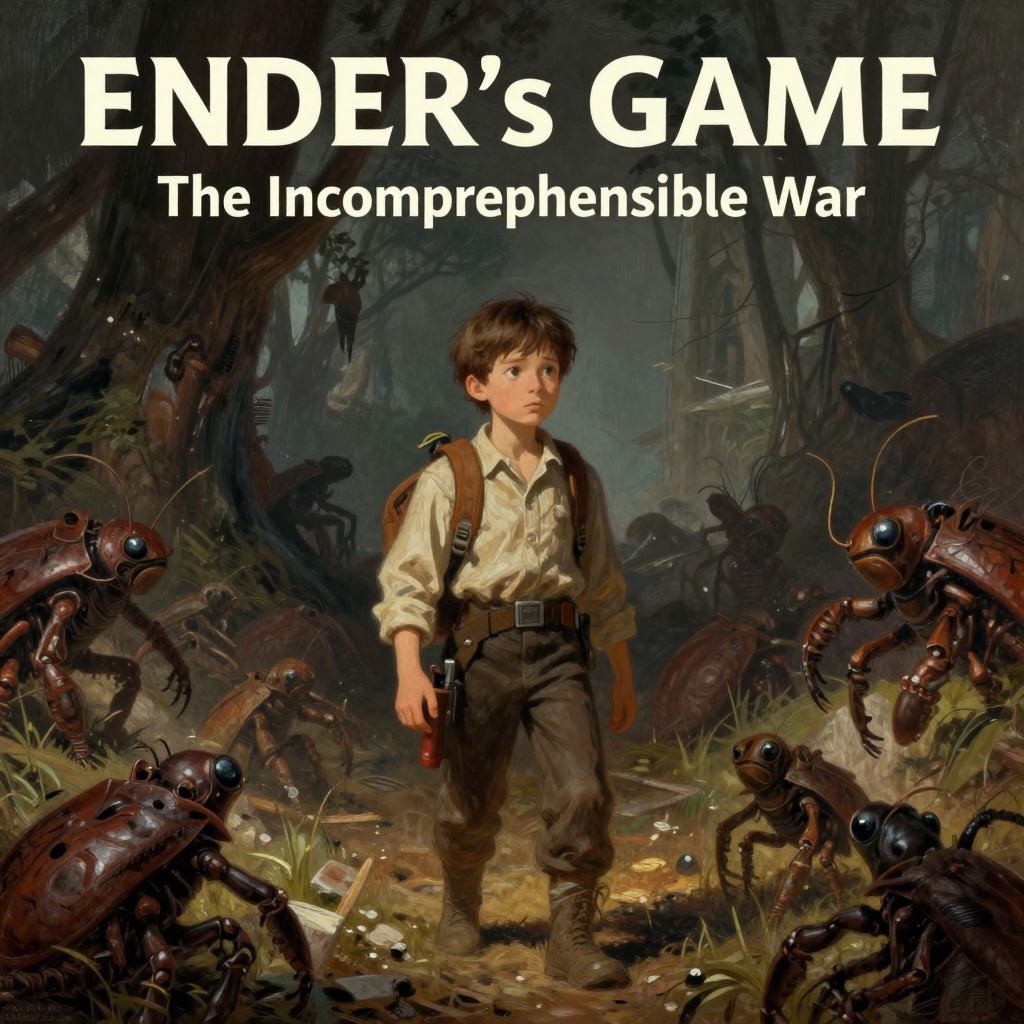
The Hive-Queen is the central intelligence and reproductive core of the bugger species, a single entity whose death causes the collapse of all her workers. Mazer Rackham theorized that each bugger fleet is controlled by a queen, and that killing her instantly disables every individual in the hive. After the Third Invasion, Ender Wiggin discovers a preserved queen cocoon on a bugger world, and through a psychic link he learns the buggers' perspective, ultimately becoming the Speaker for the Dead to tell their story.
Nature and Biology
Mazer Rackham, the hero of the Second Invasion, developed the theory that the buggers operate as a hive mind, with a single queen controlling the entire group. He argued that the buggers evolved from an insect-like pattern, with a queen as the center of the group, and that the queen's ship was the focal point of all fleet movements. Rackham's evidence came from the Second Invasion, which he believed was a colony mission that included a queen. He noted that when he killed the queen's ship, the other bugger ships immediately became inert, crashing into each other or simply drifting. The buggers communicate instantaneously, mind to mind, without language or machines, and their ships act as parts of a single organism. The Hive-Queen's cocoon, discovered by Ender, is a white ball of silk containing a fertilized pupa. Ender receives visions of the queen's life cycle: larval males cling to tunnel walls, penetrate the larval queen, shudder in ecstasy, and die; then the new queen is laid before the old, kissed to sleep with gentle poison, and wrapped in threads from the old queen's belly.
Role in the Wars
During the First and Second Invasions, the buggers attacked human worlds, but Rackham's victory in the Second Invasion was achieved by destroying the queen's ship. The buggers' hive-mind allows them to respond instantly and in perfect unity, but they can only concentrate on a few things at once. In the Third Invasion, Ender Wiggin, unknowingly commanding real fleets, fought the buggers at their home world, where all the queens from all their colonies were gathered. Ender destroyed the planet and all the queens, ending the war. After the battle, Ender learns that the buggers had not launched a third attack, and that they had never intended to murder; when they understood that humans were thinking beings, they never came again.
Psychic Connection with Ender
After the war, Ender discovers a tower built by the buggers on a colony world, containing a mirror and a hollowed-out space with the queen's cocoon. Through the cocoon, Ender experiences the hive-queen's memories, seeing the battles from her perspective. He feels her sadness and resignation as the human fighters destroyed her ships. The queen communicates to Ender that the buggers found him through the ansible, followed it, and dwelt in his mind during his tortured dreams. They built the tower and the fantasy-game landscape to leave a message for him. The queen's thought presses into Ender's mind: "We did not mean to murder, and when we understood, we never came again." She asks for forgiveness and peace, saying, "If we had kissed, it would have been the miracle to make us human in each other's eyes."
Legacy and the Speaker for the Dead
Ender takes the cocoon and vows to carry it from world to world until he finds a safe place for the queen to awaken. He writes a book titled "Speaker for the Dead," telling the buggers' story from their perspective, including their failures and greatness, and their plea for understanding. The book becomes a foundational text for a religion, and Ender becomes an itinerant Speaker for the Dead, speaking the truth of the dead. He also writes a second volume, "The Hive-Queen and the Hegemon," which together become holy writ. The Hive-Queen's legacy is one of tragic misunderstanding and the possibility of cross-species empathy, even after genocide.